Crusty Bread Loaf
- Yield:1 loaf
- Time:~7 hrs, 7 mins show details

This bread is one of my favorites to bake, and it's also fairly easy, as the proofing and baking both take place in the same Dutch oven.
The contrast of the dark, thick crust and spongy interior is a real treat.
Ingredients
- 475 gramsbread flour
- 25 gramswhole wheat flour
- 350 gramswater
- 120 gramsSourdough Starter, very active
- 10 gramssalt
Equipment
Preparation
- 10 mins
Combine all the ingredients in a large mixing bowl or stand mixer. If kneading by hand, ten minutes should do. If using a stand mixer, knead the equivalent of 10 minutes by hand for your particular setup (and make sure to scrape the flour/dough from the sides if it's sticking too much.).
- 4 hrs
Allow the bread to rise until it has at doubled in size. Depending on the strength of your starter, this may take more or less time.
- 3 mins
Place the dough on a well-floured surface and fold the dough over itself several times.
Form the dough into a boule, and place into the Dutch oven, and cover.
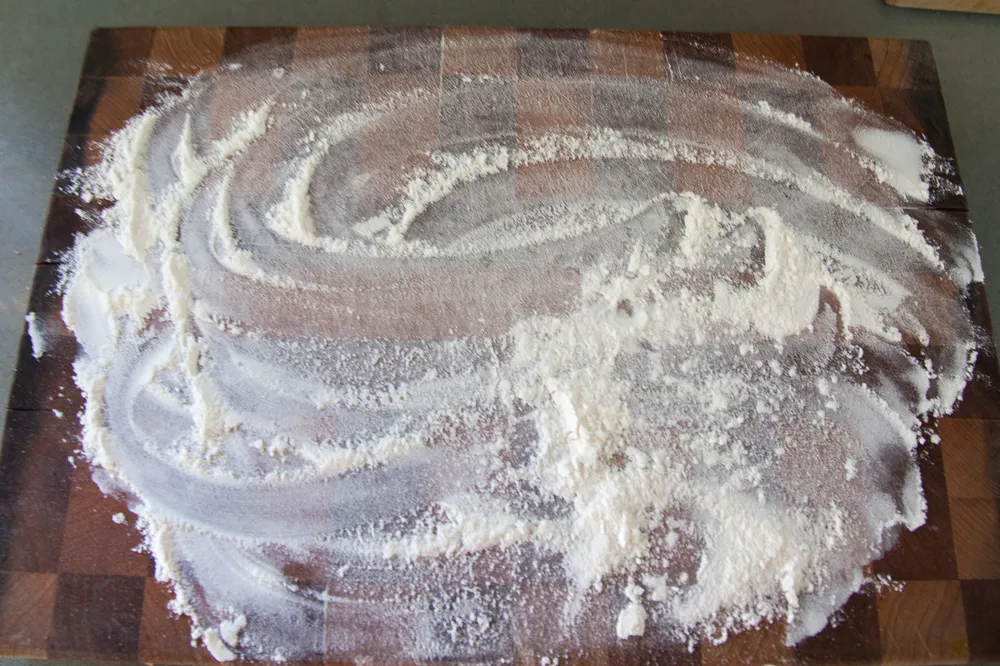
Even more flour would be fine.
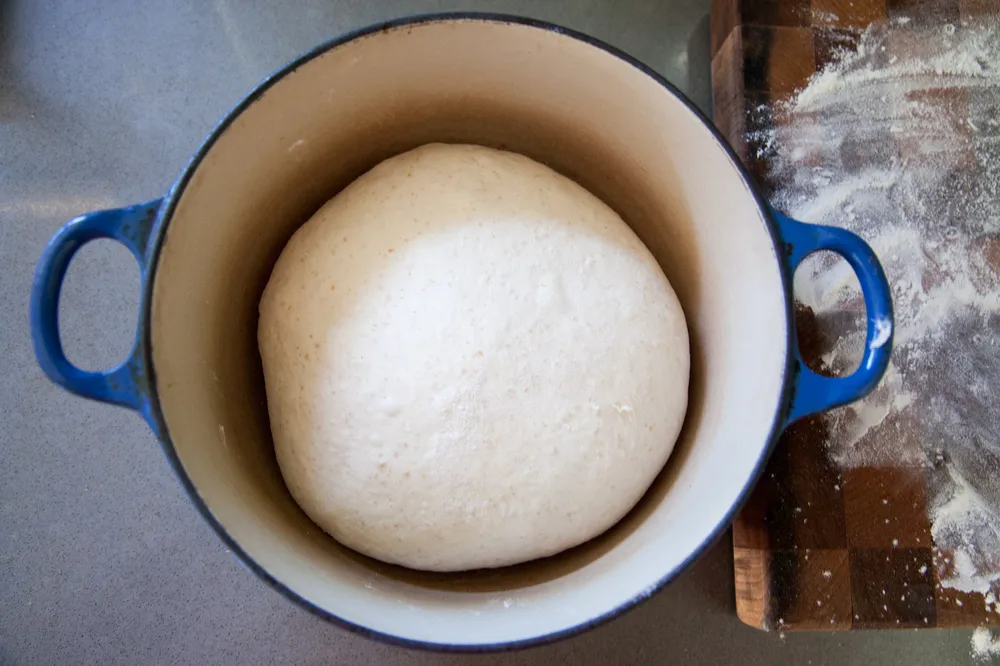
Shaped into a boule.
- 1 hr, 30 mins
Allow the dough to rise again.
Before proceeding to the next step, make sure your oven is heated to 475 F.
- 2 mins
optional
Make cuts in the loaf. I find kitchen shears convenient for this.
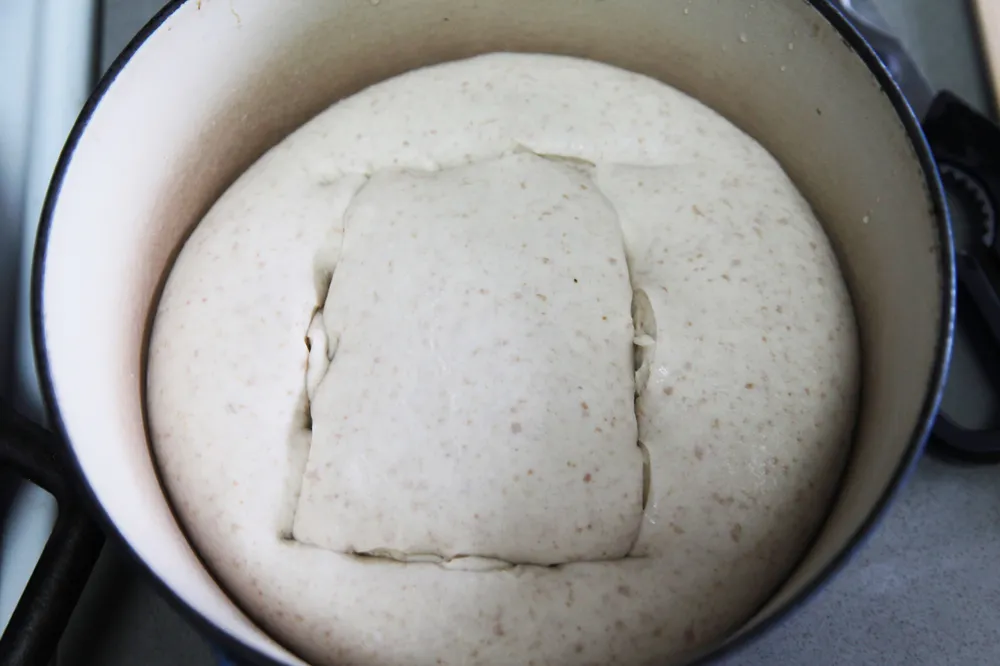
Simple square cuts.
- 1 min
Insert the Dutch oven, still covered, into the oven.
- 30 mins
Bake at 475 F.
- 30 secs
Remove the cover from the dutch oven and reduce the heat to 415 F.
- 40 mins
Continue baking, uncovered.
The bread needs to bake beyond the golden brown stage. So if you're checking on it and it appears to be golden brown, it probably needs another 10 minutes.
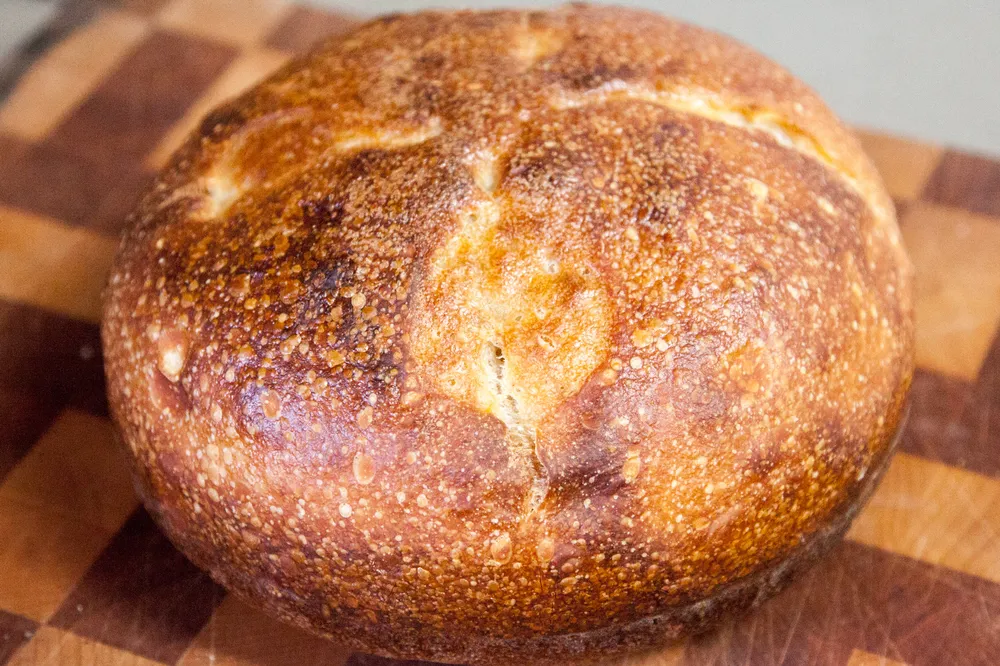
The is actually a bit light. The crust should be a little darker when it's done.
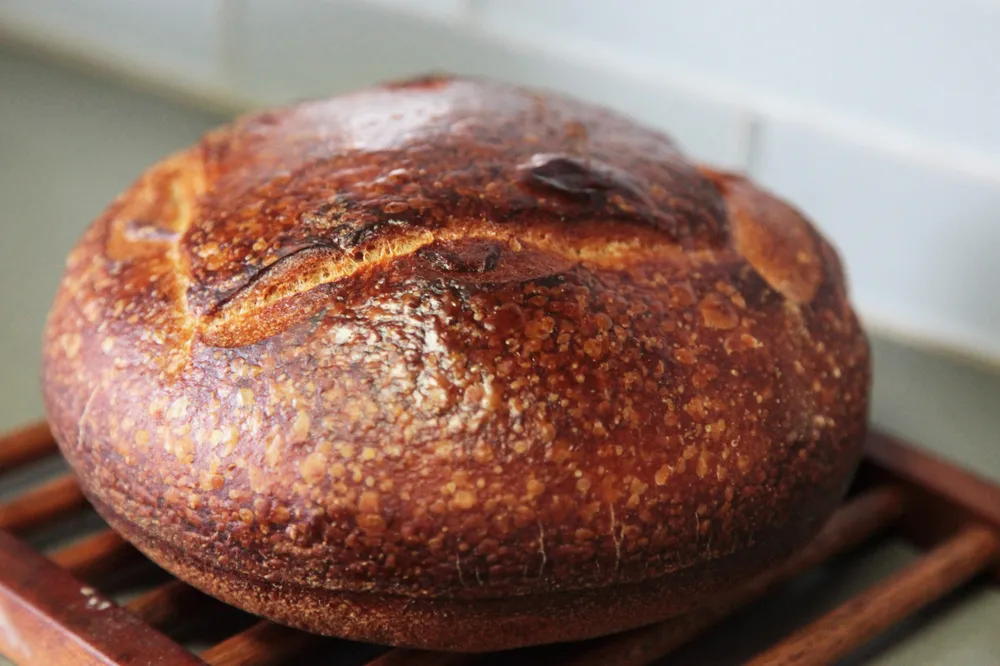
About this dark is what you want.
- 1 min
Remove the bread from the oven and place on a cooling rack.
- 10 mins
Allow the bread to cool at least 10 minutes before cutting.
Notes
The dark thick crust is the highlight for me, and it can only be achieved if you bake it beyond golden brown. Because of this bread's high hydration, you'll notice it proceeds through the browning stages more slowly than some other breads.
Save this recipe to your collection
Sign up free
Discussion