Flakey Buttermilk Biscuits
- Yield:9 biscuits
- Time:1 hr, 10 mins show details

from: alexandracooks.com/2021/1...
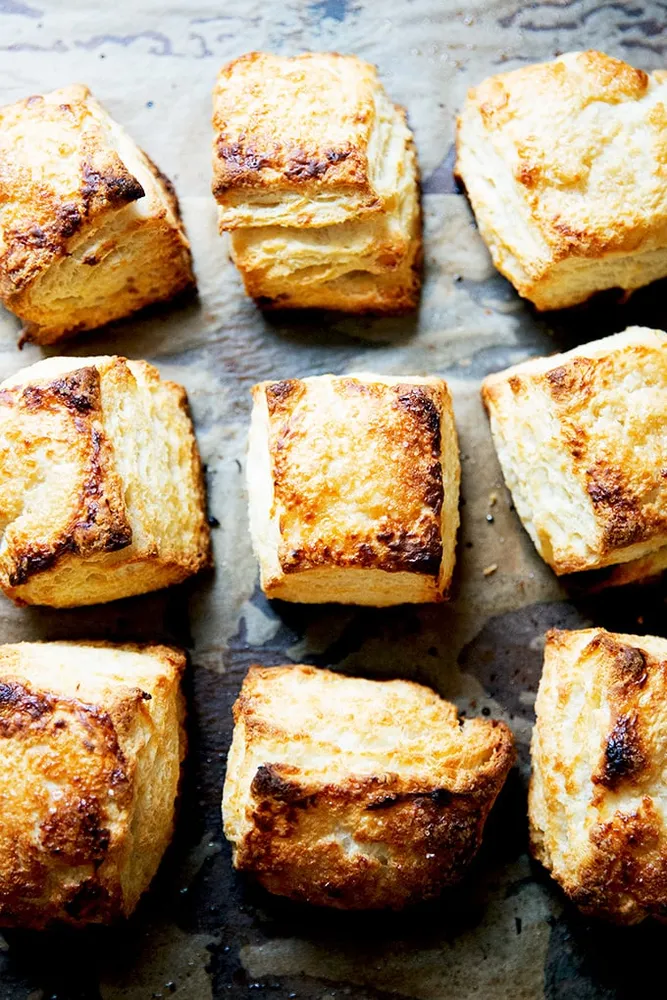
These, to me, are perfection. When broken apart from end to end, the biscuits open accordion-style, each pleat flaking into the next. The exterior is crisp and burnished and a little bit sweet thanks to a sprinkling of turbinado sugar. Heavenly on their own, these biscuits are even better with a slick more of salted butter. What isn’t?
I have made a few small changes to the recipe — I’ve added a teensy bit more salt (just a gram!), more baking powder (to encourage a little more lift), and more buttermilk, which I found essential to get the dough into a cohesive ball without overworking it.
Ingredients
- 2¾ cups(355 g) all-purpose flour
- 2 teaspoons(9 g) baking powder
- 2 teaspoons(9 g) sugar
- 1½ teaspoonssea salt or 2 teaspoons kosher salt, 10 g
- 16 tablespoons(226 g) cold cubed butter, salted or unsalted
- 1¼ cupsbuttermilk (300 g), see notes above
- For finishing
- 2 tablespoons(32 g) buttermilk
- 1 tablespoon(16 g) turbinado sugar optional


Preparation
In a large bowl wisk together the flour, salt, sugar, and baking powder. Add the butter and use the back of a fork or a pastry cutter to “cut” the butter into the dry ingredients. The butter should be the size of peas in the end. You can also do this in the food processor: pulse ten times at 1-second intervals.
Add the buttermilk and stir with a spatula to combine. You may need to knead the dough briefly with your hands to help the dough form a cohesive ball, but go light — you do not want to overmix here.
- 40 mins
Place a rack in thehttps://cinc-prod-west.s3.amazonaws.com/media/user-images/thumbs/150_150_nocrop/s8YqmzdpEG.jpg upper third of the oven, and heat it to 400ºF. Line a sheet pan with parchment paper. Transfer the portioned biscuit dough to the sheet pan and transfer it to the fridge for 30 minutes. Brush the tops of the biscuits with buttermilk and, if you wish, sprinkle with turbinado sugar. Because I find the bottoms of my biscuits to brown too quickly, I set the sheet pan on another sheet pan to bake — do this if you wish.
- 30 mins
Transfer the pan to the oven and bake for 25 to 30 minutes. Remove the pan from the oven and transfer the biscuits to a cooling rack immediately.
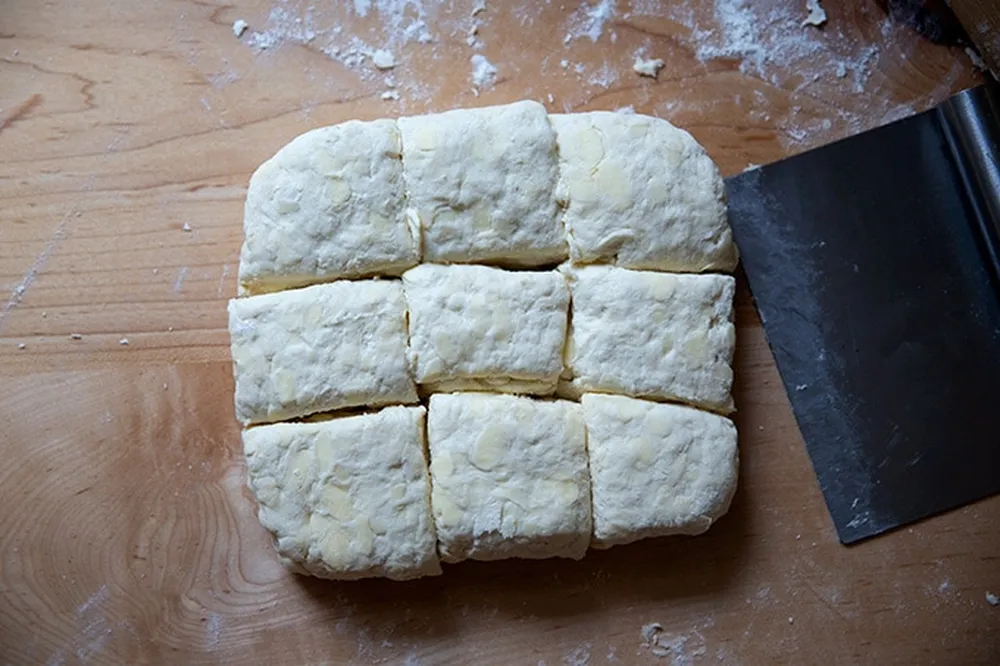
Turn the dough out onto a lightly floured work surface and pat into a 6-inch square (roughly). Dust a rolling pin with flour, and roll the square into a 14-inch long rectangle. Fold the top third down. Fold the bottom third up. Rotate the dough 90 degrees. Repeat this rolling and folding process twice more. After the final set of folds, pat the dough into a 6-8 inch square. Use a bench scraper or knife to cut the dough into 9 equal portions.
Notes
As always: use a scale for best results. The difference between 9 and 10 grams of salt may seem negligible, but it makes a difference (i.e. 10 grams is better.) Moreover, if you use cups to measure the flour you’ll end up using more or less than what is called for, which will require using more or less buttermilk.
To create those visible flaky layers, it’s all about the rolling and folding. In this recipe, you’ll roll the dough into a 14-inch rectangle, fold it envelope style, turn the dough 90 degrees; then repeat twice more.
Cold butter, cold buttermilk. This is not unlike the process for making pie dough. Using cold ingredients, working quickly, and not overworking the dough is important. Here, I use a pastry cutter to cut the butter into the dry ingredients, but you absolutely could use a food processor: ten 1-second pulses should do it.
For a no-fuss process, cut the biscuits into squares (as opposed to rounds, which require re-rolling the scraps).
Chill the cut biscuits in the fridge for 30 minutes before baking.
Brushing the biscuits with cream, buttermilk or an egg wash encourages browning. A sprinkling of turninado (or other) sugar creates that irresistible salty-sweet dynamic.
For me: baking in the upper third of the oven encourages the best browning. (Every oven is different, however, so watch closely and adjust accordingly.)
If you find the bottoms of your biscuits get brown too quickly, double up on the sheetpans for baking — I do this with my challah recipe, and it works beautifully to prevent overbrowning on the bottom.
Save this recipe to your collection
Sign up free
Discussion