Ridiculously Easy Buttermilk Biscuits
- Yield:8 biscuits
- Time:10 mins show details

Ridiculously Easy Technique
How does it work? Well, I'm glad you asked... start by placing a cup of buttermilk in the freezer for a few minutes while you melt the butter in the microwave. Let the melted butter sit while you prep the other ingredients. Then, it's just a matter of combining all the dry ingredients in a bowl and giving them a good stir. The melted butter is then combined with the super-cold buttermilk. And this, my people, is when the magic begins!
from: thecafesucrefarine.com/ri...
thecafesucrefarine.com/ridiculously-easy-buttermilk-biscuits/
Ingredients
- 1 cupbuttermilk
- 9 tablespoonsbutter divided, brown the butter first for even richer flavor
- 2 cupsall purpose flour more for counter
- 1 tablespoonsugar
- ½ teaspoonbaking soda
- 2 teaspoonsbaking powder
- ¾ teaspoontable salt

Preparation
Adjust oven rack to middle position and heat oven to 450°F. Line a sheet pan with parchment paper or spray a sheet pan with cooking spray.
Measure 1 cup of buttermilk and place in the freezer for 10 minutes while prepping other ingredients.
Place butter in a microwave-safe bowl, cover and heat on high for 30 seconds. If not completely melted, return to microwave for 10-second intervals till melted. Set aside while prepping other ingredients (or brown it in a pan and let cool while prepping other ingredients).
Whisk flour, baking powder, baking soda, sugar,and salt in large bowl.
- 10 mins
After buttermilk has been chilled in the freezer for 10 minutes, combine it with 8 tablespoons of the melted butter. (Reserve the last tablespoon for brushing on the baked biscuits.) Stir with a fork until butter forms small clumps or globules. (See picture in the post.)
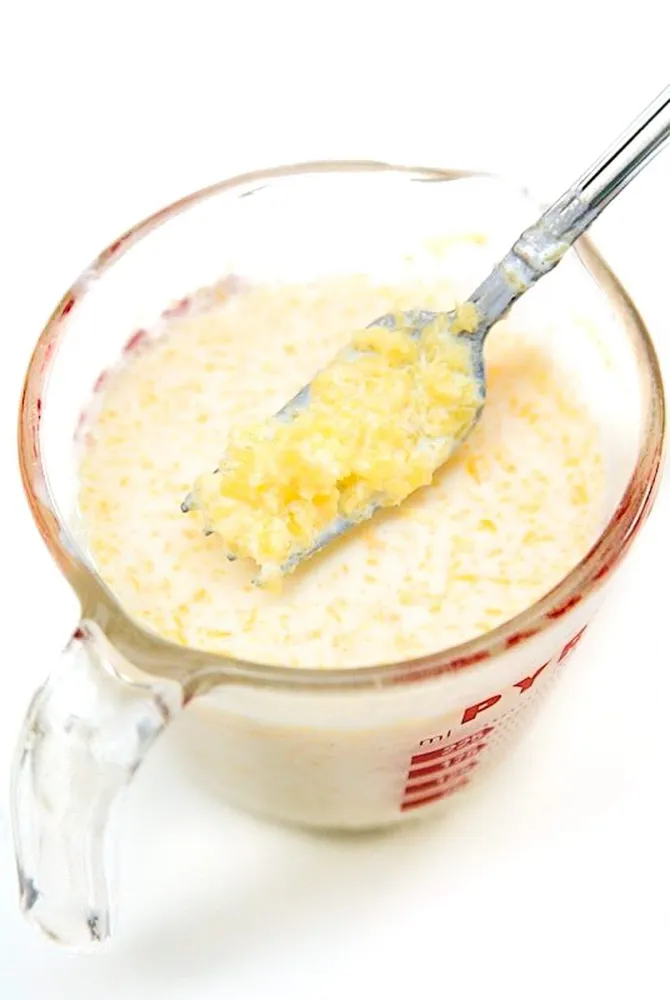
melted butter after added to cold buttermilk
Add buttermilk mixture to dry ingredients and stir with a rubber spatula just until all flour is incorporated and batter pulls away from sides of the bowl. The dough should be stiff and not super wet. If the dough is wet, add more flour 1 tablespoon at a time, stirring to combine, until fairly stiff.
Generously flour a work surface. Dump biscuit dough from bowl onto prepared work surface and turn to coat all surfaces with flour. Knead on counter 5-6 times (about 30 seconds). Flip over on the work surface to coat with flour then pat into a 6-inch square. It should be a 1½-2-inches in height.
Cut four biscuits with a 2 ½-inch biscuit cutter. Place biscuits on the prepared sheet pan. Knead scraps a few times till they hold together, then pat into a small rectangle and cut two more biscuits. Transfer last two biscuits to the sheet pan, spacing about 1 ½ inches apart. (See Café Tips in the post for an even easier cutting technique).
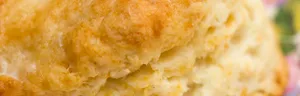
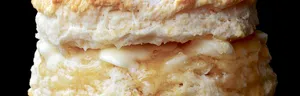
Place in oven and bake until tops are golden brown and crisp, 8 to 18 minutes. (start checking them after 8 minutes as ovens vary. You want them to be a nice golden brown, but not too brown - check the pictures above for correct color.)
Re-melt remaining tablespoon of butter in the microwave, if necessary and brush tops of hot biscuits with melted butter. Serve and enjoy!
Notes
Café Tips for making Buttermilk Biscuits
If you don't have buttermilk, make your own. Place 1 tablespoon of fresh lemon juice or vinegar in a measuring cup. Fill to 1 cup level with milk and stir well. Allow to sit for 5-10 minutes or until slightly thickened. The mixture may curdle a bit, that's okay! Use in recipes in lieu of buttermilk.
Don't skip chilling the buttermilk (step 2). It will definitely make a difference. If the buttermilk isn't really cold, the little butter globules won't form.
I made these biscuits when I was in London visiting my daughter. I learned that all-purpose flour (Plain flour) is a bit different there and it seemed like I needed more, probably closer to 2 ¼ cups.
These biscuits freeze well, both unbaked and baked. To freeze them unbaked or baked, place biscuits on a sheet pan or a plate spaced at least a half-inch from each other. Freeze till frozen, then transfer biscuits to a ziplock bag or air-tight storage container. If you've frozen them unbaked, bake them as directed in the recipe right from the freezer. Give them a couple extra minutes in the oven to compensate for the fact that they were frozen.
If you freeze these buttermilk biscuits after baking, allow them to thaw when you're ready to use them and then warm in the oven for 5-8 minutes at 300˚F.
If I'm feeling a bit pinched for time or just lazy, I'll pat the dough into a 6-inch circle and use a bench scraper to cut the dough into wedges. I either put these wedges on a sheet pan lined with parchment paper or in a 9-inch cake pan lined with parchment.
Another shortcut is to simply scoop up the dough, right from the bowl onto a sheet pan and bake as directed.
Save this recipe to your collection
Sign up free
Discussion